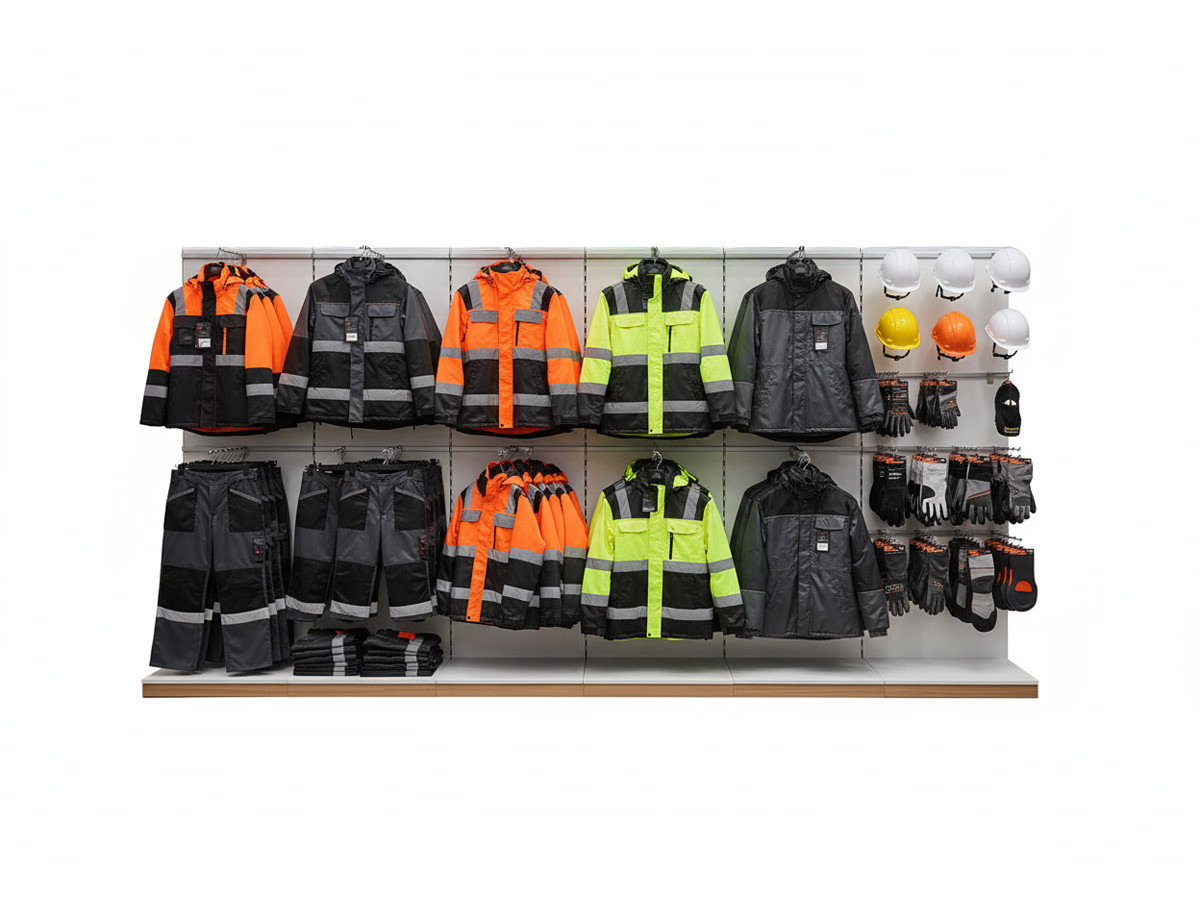
Choosing winter workwear is no easy task. It's important not only to protect from the cold, but also to ensure fit, freedom of movement, comfort, and compliance with safety requirements. It's important to consider body proportions, the presence of insulation and lining, take accurate measurements, and consider the specifics of the garment—whether it's men's, women's, or unisex. Understanding how to choose the right size for winter workwear requires a systematic approach. Below are detailed recommendations for buyers.
Where to start: measurements and "allowance for layers"

Before purchasing, it's important to accurately measure your key body measurements. It's best to take measurements over lightweight clothing, leaving room for thermal underwear, fleece, and other insulating layers.
Required measurements:
- Chest circumference is the foundation for outerwear. To understand how to measure your chest for workwear, measure around the fullest part of your chest with your arms at your sides.
- Waist and hip measurements are important when choosing trousers and overalls.
- Height is used to determine the fit and sleeve length.
Recommendation: add 6-10 cm to the chest circumference—this is the optimal allowance for fleece or thermal underwear.
How to read brand size charts
Manufacturers often use different standards. To avoid errors, look for the chart that applies to a specific brand. For example, on togtrade.com, you can easily find a size chart for winter workwear for each product.
Please note that international and Ukrainian sizes may differ. Unisex styles often follow men's sizing charts—women should choose these sizes especially carefully. The same size may have a different fit across different brands—more relaxed or more fitted.
Jackets, overalls, trousers: fit and adjustments
When choosing workwear tops and bottoms, consider functionality, mobility, and compatibility with other elements of the uniform.
- To determine the correct size for a winter work jacket, use your chest circumference plus some allowance.
- Pay attention to sleeve length—it should cover your wrists even with your arms raised.
- Check for drawstrings, adjustable cuffs, and a hood.
- For those unsure how to choose the size of winter bib overalls, it's important to consider not only your height but also the inseam length.
- Elastic inserts, straps, and waist adjustments are recommended.
- To correctly determine the size of winter work pants, use your waist and hip measurements, taking into account insulation and a loose fit.
- Adjustable straps and a waistband add comfort.
Shoes, gloves, and hats
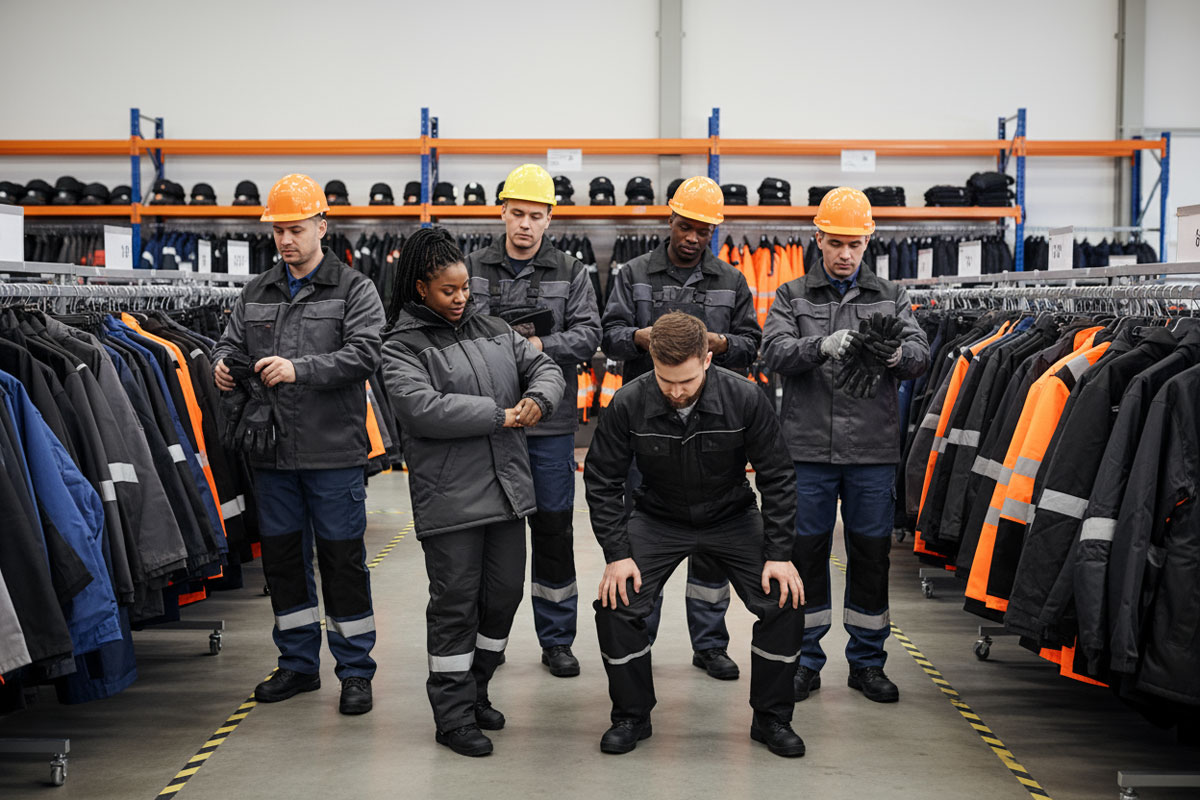
Don't forget about protective accessories, which should also be appropriate for the size and season:
- Shoes should allow for a small gap for a warm sock. Gloves should not restrict finger movement but should fit snugly.
- Headwear should cover the ears but not press on the forehead or neck.
- Insulation in accessories adds bulk, so fitting is especially important.
Trying on and buying online
Buying winter workwear online is a convenient way to save time, but it requires attention and preparation. To understand how to choose the right size for winter workwear online, carefully compare your measurements with the size charts provided on the website.
If you're unsure between two sizes, it's best to go with the looser size, especially when choosing heavily insulated styles. This will ensure a better fit, freedom of movement, and comfort, especially if the garment will be worn over fleece or other layers.
When buying online, it's especially important to consider not only standard sizes (e.g., 48, 50, 52, etc.), but also the height, sleeve length, and body type. For example, men's and women's workwear can vary significantly in fit, even if they're the same size. For unisex styles, women may need to adjust for broader shoulders and a looser fit. So, shopping online is possible and convenient if you approach it wisely: measure yourself, study the chart, consider the insulation layers, and choose the right size taking all the details into account.
Common Mistakes and How to Avoid Them
Choosing the wrong size is a common problem. Here are the main mistakes:
- Ignoring the insulation layers. Without extra space, clothes will feel tight.
- Incorrectly interpreting the chart. Be aware of the differences between products from different brands.
- Buying "by eye." This is especially dangerous when it comes to overalls.
- Failure to try them on. When in doubt, order two sizes and return the one that doesn't fit.
Conclusion
Understanding how to choose the right size for winter workwear helps avoid discomfort, improve comfort, freedom of movement, and productivity at work. Whether you're choosing men's, women's, or unisex clothing, the key to success is accurate measurements and attention to detail.


Write a comment