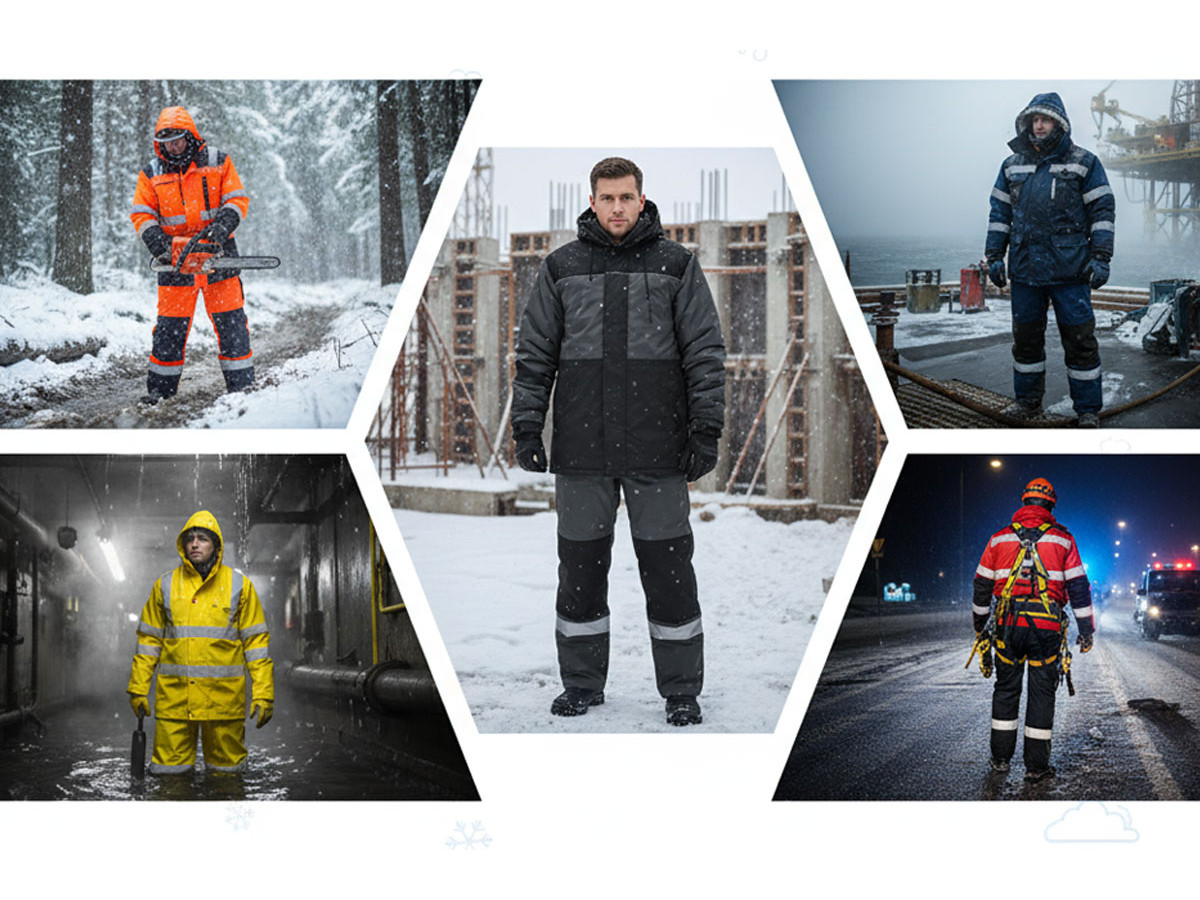
In harsh winter conditions, when snow and rain alternate, and work takes place outdoors, choosing the right workwear becomes a matter not only of comfort but also of safety. Waterproof winter workwear is more than just a warm jacket with a hood; it's a high-tech solution that takes into account the climate, workload, and specific activities. In this article, we'll discuss when you need waterproof winter workwear, how to choose waterproof winter workwear, what to look for when buying, and where to find quality products.
When you need waterproof winter workwear
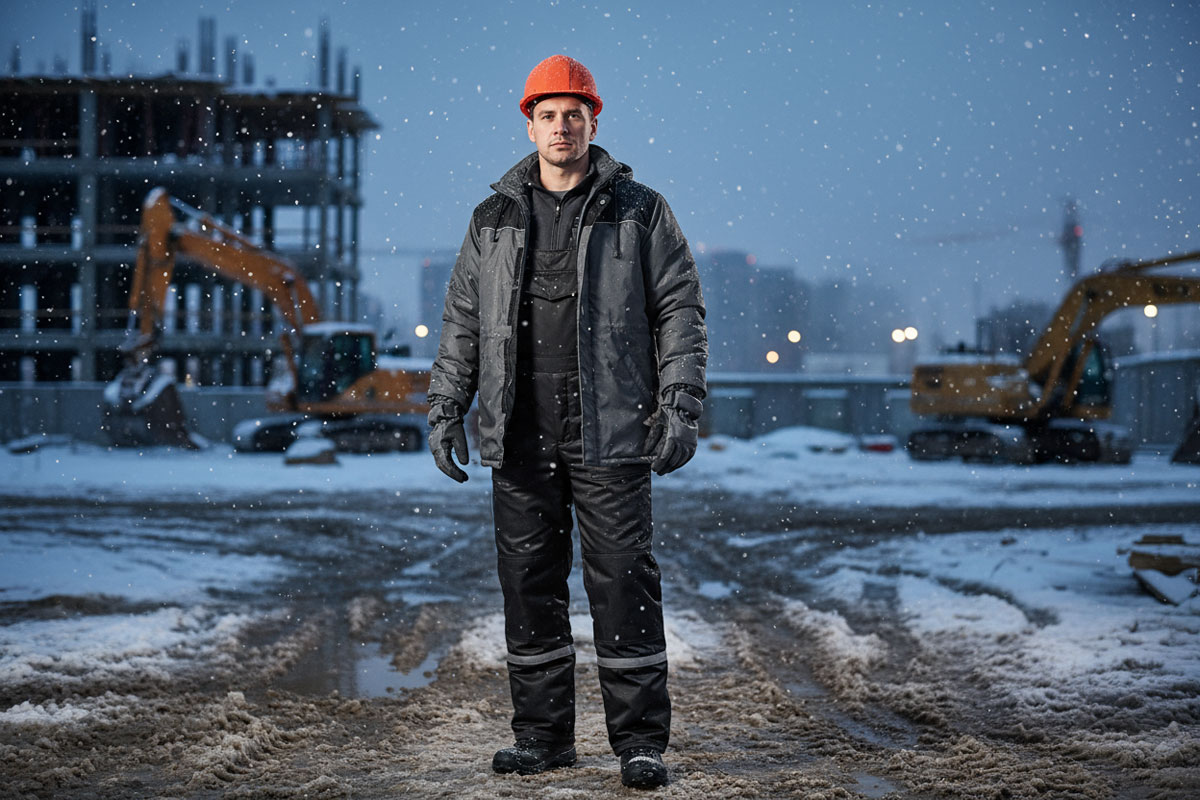
If you work outdoors, regardless of snow, rain, or drizzle, reliable water-resistant protection is essential. Waterproof workwear is required:
- when working on construction sites during the winter season;
- for road and utility services;
- when operating machinery and equipment in open areas;
- In warehouse logistics with frequent outdoor activities;
- in forestry, agriculture, and fishing.
It's important to understand what workwear is needed in precipitation. It should not only provide warmth but also protect against moisture, keeping the body dry to avoid hypothermia and illness.
Water vs. "breathing": how to read parameters
Modern workwear materials are often equipped with a membrane—a thin layer that simultaneously keeps water out and allows vapor to escape from the inside. But how do you understand the numbers?
The labels indicate two key parameters:
- Water resistance (water impermeability)—measured in mm of water column. A good indicator for winter is 5,000 mm or more. For heavy precipitation and wet snow, 10,000 mm or more is recommended.
- Vapor permeability (breathability)—measured in g/m²/24h. A value of 5,000 g/m²/24h or more allows for comfortable physical activity.
It's important to find a balance between these characteristics. For example, clothing with high moisture resistance may be less breathable—this is acceptable for low-impact work. However, if you're active, it's better to choose a membrane with high vapor permeability.
Materials and Construction
Modern technologies allow us to create materials that combine waterproofness and durability. Winter waterproof workwear often uses:
- membrane fabrics (two-layer or three-layer);
- dense nylon with a polyurethane coating;
- wear-resistant polyester with a DWR impregnation;
- insulation made from synthetic fibers (e.g., Thinsulate).
The question arises: which is better—a two-layer or a three-layer membrane in winter?
- A two-layer membrane is softer and more comfortable, but requires a lining and may be less durable.
- A three-layer membrane is more durable and wear-resistant, ideal for harsh conditions.
High-quality waterproof winter workwear always has fully taped seams. This means all seams are sealed with a special tape that prevents water penetration, even in heavy precipitation.
What to Bring
If you're unsure what workwear you need for wet snow in winter, consider the following:
- jackets and trousers with a membrane (at least 10,000 mm of water resistance);
- overalls – especially suitable for kneeling or sitting in the snow;
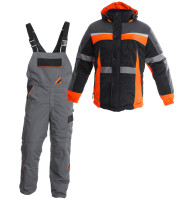
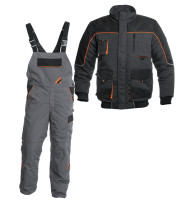
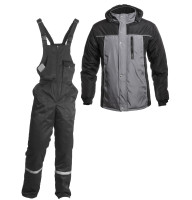
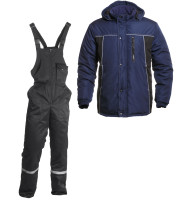
- waterproof insulated suits with sealed seams and windproof flaps.
Don't forget about accessories: gloves, boots, and headwear should meet the same water resistance and durability requirements.
Fit and Ergonomics
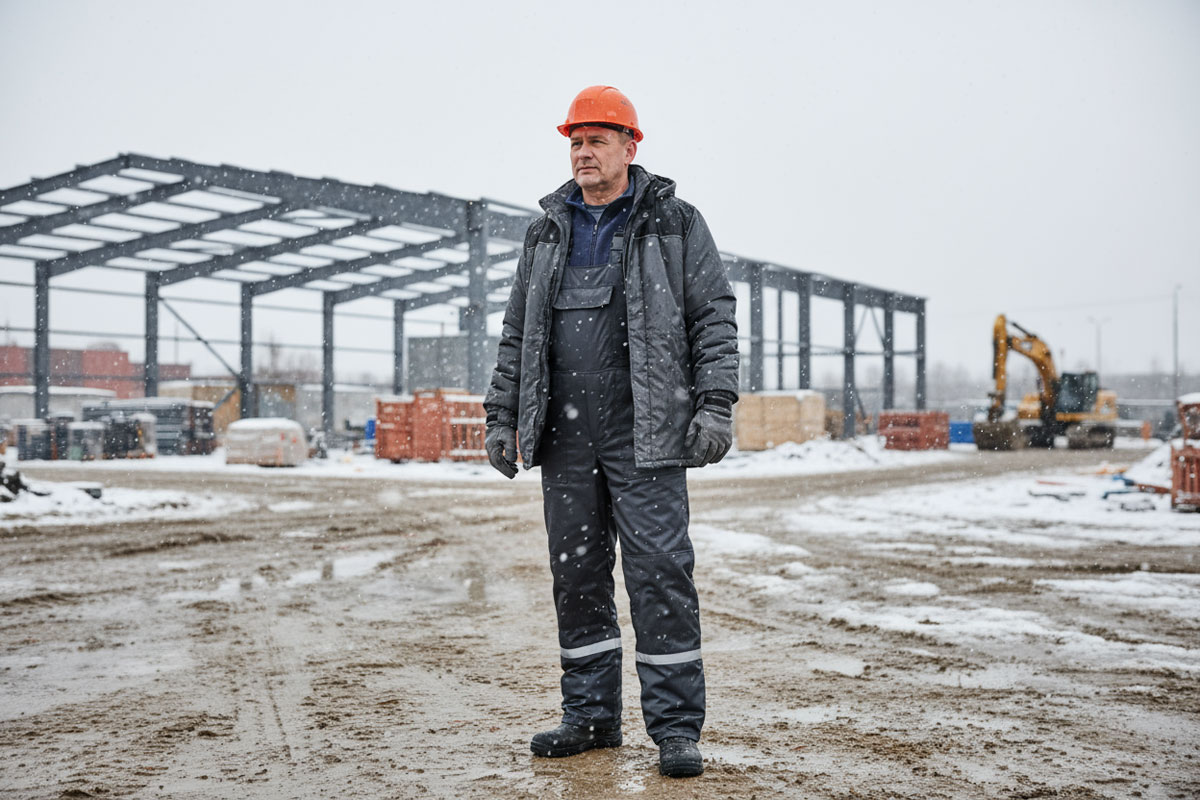
Comfort at work means not only warmth but also freedom of movement. Proper workwear fit includes:
- anatomical cut with room for thermal underwear;
- elastic inserts, drawstrings, and adjustments;
- reinforced areas in areas of greatest wear (knees, elbows, trouser hems);
- Zippered ventilation openings provide a balance between moisture protection and breathability.
Avoid choosing clothing that's too tight—it's important to maintain a layer of air in low temperatures and high activity conditions.
Care and Service Life
Even the most modern materials require proper care. Here are some recommendations:
- Wash workwear on a delicate cycle using specialized membrane cleaners.
- Do not use fabric softeners, as they will damage the water-resistant coating.
- Dry the garments naturally, away from direct heat.
- Renew the water-resistant coating every 10–15 washes.
With proper care, a high-quality winter work suit will retain its properties for up to 3–5 seasons of active work.
Where to buy high-quality winter workwear
If you're looking for a reliable selection that meets all the above requirements, we recommend visiting the TogTrade.com online store. Here you'll find products with proven moisture resistance, durability, and ergonomics. Convenient filtering makes it easy to choose waterproof winter workwear based on your parameters and needs.
Conclusion
When choosing winter workwear, it's important to understand not only when waterproof winter workwear is needed, but also how materials, technologies, operating conditions, and comfort interact. Pay attention to membrane properties, fully taped seams, quality hardware, and ergonomics. And most importantly, don't skimp on your health: properly selected workwear will protect you from moisture, cold, and discomfort in any weather, be it snow, rain, or frost.

Write a comment